

Spinal Decompression Therapy in Camarillo, CA
- Session Time:
- 20 to 30 minutes
- Downtime:
- None
- Typical Plan:
- 12 to 24 sessions
- FDA Cleared Device:
- Yes
Relief Without Surgery
Spinal Decompression Therapy Built Around Your Disc
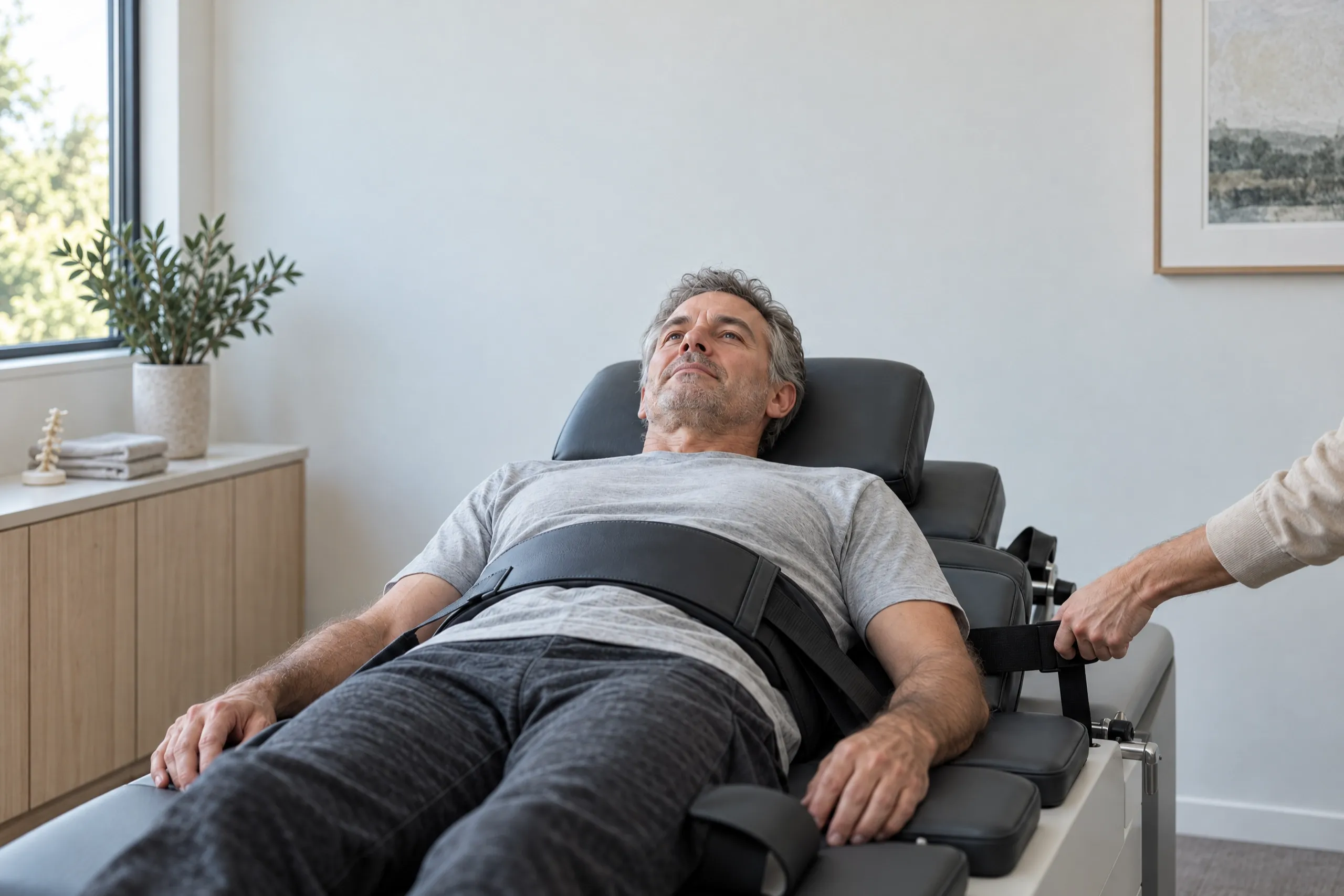
Spinal decompression therapy in Camarillo, CA is a non-surgical treatment that uses a computer-controlled table to gently stretch the spine and lower the pressure inside a damaged disc. We treat patients from Camarillo, Thousand Oaks, Oxnard, Ventura and the surrounding Ventura County communities. If sitting, standing and sleeping have all become negotiations with pain, this is worth a conversation.
Dr. Edmond Dooman, DC has practiced non-surgical spine care in Camarillo since founding the Institute in February 1994 and brings over 32 years of clinical experience to every decompression plan. Dr. Edmond Dooman, DC reviews your history, exam findings and imaging before a single session is scheduled, and he will say so plainly when decompression is not the right fit.

The Challenge
When Disc Pain Calls for Spinal Decompression
Understanding Disc Compression
Disc pain rarely announces itself all at once. It starts as a stiff morning, then a drive to Oxnard you have to break up, then a sharp catch every time you bend to load the dishwasher. Some patients feel it mostly in the low back. Others feel almost nothing there and instead get burning, numbness or weakness running down one leg. Sleep gets shallow because no position stays comfortable for long, and the fear of making it worse quietly shrinks what you are willing to do.
Spinal decompression works on the mechanical side of that problem. Slow cycles of traction reduce pressure inside the disc so the bulging portion is encouraged inward and irritated nerve roots get more room. Less pressure often means less of the leg pain, and better fluid exchange supports tissue that has almost no blood supply of its own. Most patients read or rest through the session and drive themselves home. Our guide on relieving lower back pain without surgery covers what pairs well with it.
Understanding Your Treatment
What Is Spinal Decompression Therapy?
The Science of Negative Disc Pressure
Spinal decompression therapy is a non-surgical treatment using an FDA cleared motorized table to apply slow, computer-controlled traction to the spine for disc-related pain. The National Institutes of Health notes most back pain improves without surgery.
Each cycle of pull and release lowers pressure inside the disc, which can draw the bulge inward and rehydrate it. You lie clothed on the table in a padded harness as the unit runs a preset cycle. Results build over a course of visits, often alongside chiropractic adjustments in Camarillo.
Treatment Timeline:
- Treatment Time:
- 20 to 30 minutes (per session)
- First Signs:
- 2 to 4 weeks (early sessions)
- Full Effect:
- 6 to 10 weeks (full plan)
- Recovery:
- None (drive yourself home)
What We Treat
Spinal Decompression Treatment Areas
Disc and Nerve Related Pain
- Herniated or Bulging Disc
- Lowers internal disc pressure to ease the bulge off the nerve
- Sciatica
- Relieves root compression that sends pain down the leg
- Chronic Low Back Pain
- Targets disc-driven pain that rest and medication have not settled
- Spinal Stenosis
- Creates space in a narrowed canal to calm standing and walking pain
- Degenerative Disc Disease
- Supports fluid exchange in worn, dehydrated discs
- Neck and Arm Pain
- Cervical decompression for disc pain radiating into the shoulder
Benefits of Spinal Decompression Therapy
Non-Surgical and Drug-Free
Spinal Decompression vs. Alternatives
A plain comparison of how non-surgical spinal decompression sits alongside the other options patients weigh for disc-related pain.
| Treatment | Mechanism | Time | Results | Duration | Downtime | Best For |
|---|---|---|---|---|---|---|
| Spinal Decompression Therapy | Computer-controlled axial traction | 20 to 30 min | Gradual over weeks | Months with maintenance | None | Disc-driven back and leg pain |
| Chiropractic Adjustments | Manual joint mobilization | 10 to 20 min | Often same visit | Days to weeks per visit | None | Joint restriction and stiffness |
| Epidural Steroid Injection | Anti-inflammatory around the nerve | 15 to 30 min | Days | Weeks to months | 1 to 2 days | Acute nerve inflammation |
| Physical Therapy | Guided exercise and loading | 30 to 60 min | Weeks | Long term with effort | None | Strength and movement deficits |
| Discectomy Surgery | Surgical removal of disc material | 1 to 2 hours | Often rapid | Years | Weeks | Severe or progressive nerve loss |






Is This Right for You
Who Is a Good Candidate for Spinal Decompression Therapy?
Finding Your Best Route to Relief
Spinal decompression suits patients whose pain traces back to a compressed or damaged disc rather than to muscle strain alone.
Ideal Candidates for Spinal Decompression Therapy
- Adults with exam or imaging findings pointing to a herniated or bulging disc
- Patients with sciatica in Camarillo, CA or leg pain that follows a nerve path
- People living with spinal stenosis or degenerative disc changes
- Anyone who wants to exhaust non-surgical care before injections or an operation
- Patients who can commit to a course of sessions across several weeks
Who Should Wait or Avoid Spinal Decompression Therapy
- Pregnancy
- Spinal fracture, severe osteoporosis or bone infection
- Spinal tumors or metastatic disease
- Surgical hardware such as fusion instrumentation or an implanted stimulator
- Abdominal aortic aneurysm or uncontrolled cardiovascular disease
- Progressive weakness, saddle numbness or any loss of bowel or bladder control
That last group is not a waiting list. Saddle numbness with bowel or bladder changes is a medical emergency and needs the emergency department, not our table. Dr. Dooman reviews your history, exam and imaging first, and when decompression is not the answer he will point you toward herniated disc care that is, or refer you out.
Your Experience
What Happens During Spinal Decompression Treatment
Step-by-Step Process
Assessment
Dr. Dooman reviews your exam, symptom pattern and imaging to confirm the disc level to target.
Positioning
You lie clothed on the decompression table while a padded pelvic or cervical harness is fitted.
Decompression
The table runs a preset cycle of gentle pull and release for roughly 20 to 30 minutes.
Recovery Support
Ice, electrotherapy or laser may follow the session to calm the treated segment.
Review
Dr. Dooman checks your response, adjusts the protocol and confirms your next visit.
Risks and Side Effects
What to Know
Common Spinal Decompression Side Effects
The usual reactions are mild and short-lived: muscle soreness across the low back or neck, a stretched or fatigued feeling in the treated area, and occasional stiffness the morning after a session. These typically settle within 24 to 48 hours and often fade entirely as your body adapts over the first two weeks of care.
Less Common Reactions
A smaller number of patients report a temporary increase in leg or arm symptoms after early sessions, or a headache following cervical decompression. Serious complications are rare when patients are screened properly, which is why contraindications such as fracture, severe osteoporosis, spinal tumor and aortic aneurysm are ruled out before treatment begins.
Safety and Device Status
Motorized decompression tables are FDA cleared Class II devices operated under clinician supervision. The National Center for Complementary and Integrative Health notes that non-surgical spine care is generally safe with a trained provider. Dr. Dooman sets the traction force and angle to your tolerance and stops or revises the plan if symptoms escalate.
Investment
Spinal Decompression Cost in Camarillo
Pricing and Payment Options
How Much Does Spinal Decompression Cost in Camarillo?
Cost depends on how many sessions your disc actually needs, whether we are treating the low back or the neck, and whether decompression is paired with adjustments, laser or electrotherapy in the same plan. Most patients complete a course of visits rather than a single session, so we quote the plan rather than a per-visit figure pulled out of context. Exact pricing is discussed during your personalized consultation, once the exam tells us what the plan should look like.
Flexible Payment Options
Camarillo Spine & Nerve Institute is a cash-based practice. We do not bill insurance, which keeps the treatment plan a clinical decision rather than a coverage decision.
- Major credit cards - accepted for single visits or full plans
- CareCredit - healthcare financing with monthly payment options
- WellFit - an additional financing option for spreading plan costs
Stephanie Maxwell handles financing questions and scheduling. Contact our Camarillo, CA office and she will walk you through the options before you commit to anything.
The CSNI Difference
Why Choose Camarillo Spine & Nerve Institute for Spinal Decompression in Camarillo, CA
Camarillo's Non-Surgical Spine Team
Dr. Edmond Dooman, DC has spent over 32 years treating spine and nerve pain in Ventura County, and he uses that history to judge which discs respond to decompression and which need a different route. Every plan starts with an exam, not a package.
Root Cause First
Exam and imaging review before any decompression session is booked
32 Years of Practice
Dr. Dooman has treated Ventura County spine pain since 1994
Honest Candidacy
We say no and refer out when decompression is not the right answer
One Connected Plan
Decompression coordinated with adjustments, laser and core work
Computer-Controlled Traction
An FDA cleared table runs slow, measured cycles of pull and release
Recovery Support
Ice, electrotherapy or laser can follow a session to calm the treated segment

Explore More Related Treatments
Chiropractic Adjustments
Precise Gonstead adjustments for structural and postural correction, without drugs or surgery.
- Same-Day Relief
- Segment-Specific
- No Downtime
Explore More Related Treatments
Laser Therapy for Pain with Emvital
Relief for muscle and joint pain
- Drug-Free Relief
- No Downtime
- Comfortable Warmth
Explore More Related Treatments
Electrotherapy
Gentle electrical stimulation that calms pain signals and eases muscle tension.
- No Medication
- Comfortable Session
- No Downtime
Explore More Related Treatments
Peripheral Neuropathy Treatment
Drug-free, non-surgical care for the numbness, burning, and tingling of nerve damage.
- Drug-Free Approach
- No Downtime
- Non-Invasive Care



Common Questions
Frequently Asked Questions About Spinal Decompression Therapy
How much does spinal decompression therapy cost in Camarillo?
How long does spinal decompression last?
Does spinal decompression hurt?
When will I see results from spinal decompression?
How many spinal decompression sessions do I need?
What is the difference between spinal decompression and chiropractic adjustments?
Is spinal decompression the same as traction?
Can spinal decompression help sciatica?
Can older adults have spinal decompression therapy?
Does spinal decompression work after failed back surgery?
What should I do between spinal decompression sessions?
Do I need an MRI before spinal decompression?
Contact Us
Schedule Your Consultation
References
- Apfel et al., BMC Musculoskeletal Disorders. (2010). Restoration of disc height through non-surgical spinal decompression was associated with reduced discogenic low back pain. PMID: 20615252.
- Schueren et al., Military Medicine. (2025). Retrospective chart review of non-surgical spinal decompression as a therapeutic modality for low back pain. PMID: 40984100.
- Vanti et al., Physical Therapy. (2021). Systematic review and meta-analysis of mechanical traction for lumbar radiculopathy. PMID: 33382419.
- Vanti et al., Acta Orthopaedica et Traumatologica Turcica. (2023). Systematic review with meta-analysis on adding mechanical traction to physical therapy for low back pain. PMID: 36939359.
- Adar et al., Cureus. (2024). Comparison of traditional motorized traction and non-surgical spinal decompression therapy added to conventional physiotherapy. PMID: 39318658.
- National Center for Complementary and Integrative Health. (2025). Guidance on the safety and evidence base for non-surgical spinal care.