

Depression and Anxiety Treatment in Camarillo, CA
Support for Your Mood and Mental Clarity
- Common In:
- Adults of every age
- Primary Causes:
- Brain Chemistry, Stress, Chronic Pain
- Treatment Time:
- About 25 minutes
- Results:
- Typically several weeks


What Are Depression and Anxiety?
Recognizing the Signs
If you are having thoughts of suicide or self-harm, or you are in immediate distress, call or text 988 to reach the 988 Suicide and Crisis Lifeline, or go to your nearest emergency room. In an emergency, call 911. This page is educational information, not emergency care and not a substitute for evaluation by a licensed mental health professional.
Depression and anxiety are recognized medical conditions, not personal weakness. Depression involves a persistent low mood or loss of interest that lasts most of the day for two weeks or longer, while anxiety involves worry, tension or physical arousal that is difficult to switch off. The National Institute of Mental Health notes that the two frequently occur together in the same person.
When you are living with either one, you may notice that sleep stops restoring you, that concentration slips, that decisions feel heavier than they used to, or that the things you once enjoyed now feel flat. Many patients describe it as brain fog, a sense of moving through the day at half speed.
Camarillo Spine & Nerve Institute offers TMS therapy with Exomind as a drug-free option that may support mood and mental clarity. It is intended to complement, not replace, psychiatric care, psychotherapy or any medication your prescriber has recommended. Nobody should stop or change a prescribed medication without speaking to the prescriber first.
Why Depression and Anxiety Happen
Understanding the Root Causes
01The Science
Mood is regulated by networks of brain cells that communicate through chemical and electrical signals. Research on depression has focused heavily on the dorsolateral prefrontal cortex, a region behind the left side of the forehead that helps regulate attention, motivation and emotional control. Studies suggest that activity in this region is often reduced in people experiencing major depression, which is why it is the target used in transcranial magnetic stimulation.
Genetics, hormones, thyroid function, sleep loss, grief, medication side effects and long periods of stress can all shift that balance. The National Institute of Mental Health describes anxiety disorders as arising from a combination of genetic, environmental and developmental factors rather than a single cause. Because the causes are layered, diagnosis belongs with a licensed mental health professional or your physician.
Long-standing physical pain is one factor our patients raise often. Living for months or years with back pain or persistent muscle and joint pain disrupts sleep, limits activity and narrows social life, and studies suggest that depression and chronic pain co-occur far more often than chance would predict. Each condition tends to make the other harder to treat, which is why addressing the physical side and the mood side together often makes sense.
02Deeper Understanding
How Exomind Brain Stimulation Works
Targeted Stimulation and Who Should Avoid It
Exomind uses transcranial magnetic stimulation, or TMS, a non-invasive method in which a coil placed against the scalp delivers brief magnetic pulses to the dorsolateral prefrontal cortex. The pulses pass painlessly through the skull and induce a small electrical current in the tissue beneath, which may gradually change how actively that region fires. No sedation is used, no needles are involved, and you sit upright and awake for roughly 25 minutes. Our blog post on the evolution of brain stimulation traces how the technology developed.
Because a magnetic field is involved, TMS is not appropriate for everyone. Ferromagnetic metal or an implanted electronic device in or near the head is a reason for caution or exclusion, including cochlear implants, deep brain stimulators, aneurysm clips, stents, coils and metal plates near the treatment site. A personal or family history of seizures, epilepsy, a prior head injury, a brain tumor or a stroke must be disclosed, as must pregnancy, planned pregnancy and any medication that lowers the seizure threshold. Published international safety guidance treats seizure as a rare but real risk and recommends careful screening before any session.
Results build gradually rather than immediately, typically over a series of sessions across several weeks, and many patients notice changes in sleep or concentration before they notice changes in mood. No outcome is guaranteed, and TMS with Exomind in Camarillo, CA is offered alongside, never instead of, the therapy or medication your mental health provider has recommended.
What Can Worsen Depression and Anxiety?
Several factors tend to stack on top of each other, and many of our patients in Ventura County are carrying more than one. None of these causes depression or anxiety by itself, and identifying them is a conversation to have with a licensed mental health professional.
- 01Chronic PainMonths or years of unresolved pain disrupt sleep and activity, and studies suggest pain and low mood reinforce each other.
- 02Poor SleepBroken or shortened sleep impairs emotional regulation and concentration, and low mood in turn makes sleep harder to hold.
- 03Prolonged StressSustained work, caregiving or financial pressure keeps the stress response elevated long after the demand has passed.
- 04Reduced ActivityPain, fatigue or low motivation shrink daily movement, and less activity typically feeds further fatigue and withdrawal.
- 05Medical FactorsThyroid disorders, hormonal shifts, nutrient deficiencies and some medications may affect mood and warrant a physician's review.
- 06Social IsolationWithdrawing from people who matter to you removes support at the point when many patients need it most.

Why Choose Camarillo Spine & Nerve Institute for Depression and Anxiety Care in Camarillo, CA
Camarillo Spine & Nerve Institute is not a mental health provider. We do not diagnose psychiatric conditions, we do not prescribe or adjust medication, and we do not provide psychotherapy or crisis care. What we offer is TMS therapy with Exomind, delivered under appropriate professional oversight, as a drug-free option that may support mood and mental clarity alongside the care your mental health provider directs. Dr. Edmond Dooman, DC is a chiropractor who has served Ventura County since founding the practice in February 1994, and every case starts with a consultation to screen for safety and decide whether Exomind is appropriate for you at all.
- Consultation First
- We screen your history, implants and seizure risk before anything is scheduled, and we say no when Exomind is not appropriate.
- Complements Your Care
- Exomind is offered alongside your therapist, physician or prescriber, never as a replacement for treatment they have recommended.
- Drug-Free and Non-Invasive
- Sessions involve no medication, no needles and no sedation, and most patients drive themselves home afterward.
- Whole-Person Perspective
- We also treat the chronic pain that often sits underneath low mood, so both sides of the picture get attention.
Treatment Options Comparison
Of the options we offer, only Exomind targets mood directly. The others address physical contributors such as pain, deconditioning or bladder symptoms, and none of them replaces therapy or medication.
| Treatment | Best For | Session Time | Results Timeline | Maintenance |
|---|---|---|---|---|
| TMS Therapy with Exomind | Mood and mental clarity support | About 25 minutes | Typically several weeks | Series-based |
| Core Strengthening with Emsculpt Neo | Deconditioning and low activity | 30 minutes | Four to twelve weeks | Occasional top-ups |
| Laser Therapy for Pain with Emvital | Muscle tension and pain that wears mood down | 10-20 minutes | Often within two to four sessions | As symptoms return |
| Pelvic Floor Therapy with Emsella | Bladder symptoms affecting confidence | 28 minutes | Four to eight weeks | Periodic sessions |
Signs You May Be Dealing With Depression or Anxiety
Noticing these patterns does not diagnose anything, and many of them have other explanations. If several have persisted for two weeks or more, it is worth raising with your physician or a licensed mental health professional. Patient education from the American Psychiatric Association is a useful starting point.
Persistent Low Mood
You have felt down, empty or hopeless most of the day, most days, for two weeks or longer.
Loss of Interest
Activities and people you used to look forward to now feel flat, and you find reasons to skip them.
Brain Fog
Focus, memory and decision-making feel slower than usual, and simple tasks take noticeably more effort.
Constant Worry
Your mind runs ahead to what might go wrong, and you cannot set the worry down even when nothing is wrong.
Physical Tension
You notice a tight chest, a clenched jaw, restlessness or a racing heart without a clear physical cause.
Disrupted Sleep
You sleep far more or far less than usual, wake through the night, or wake unrested no matter the hours.
Explore More Related Treatments
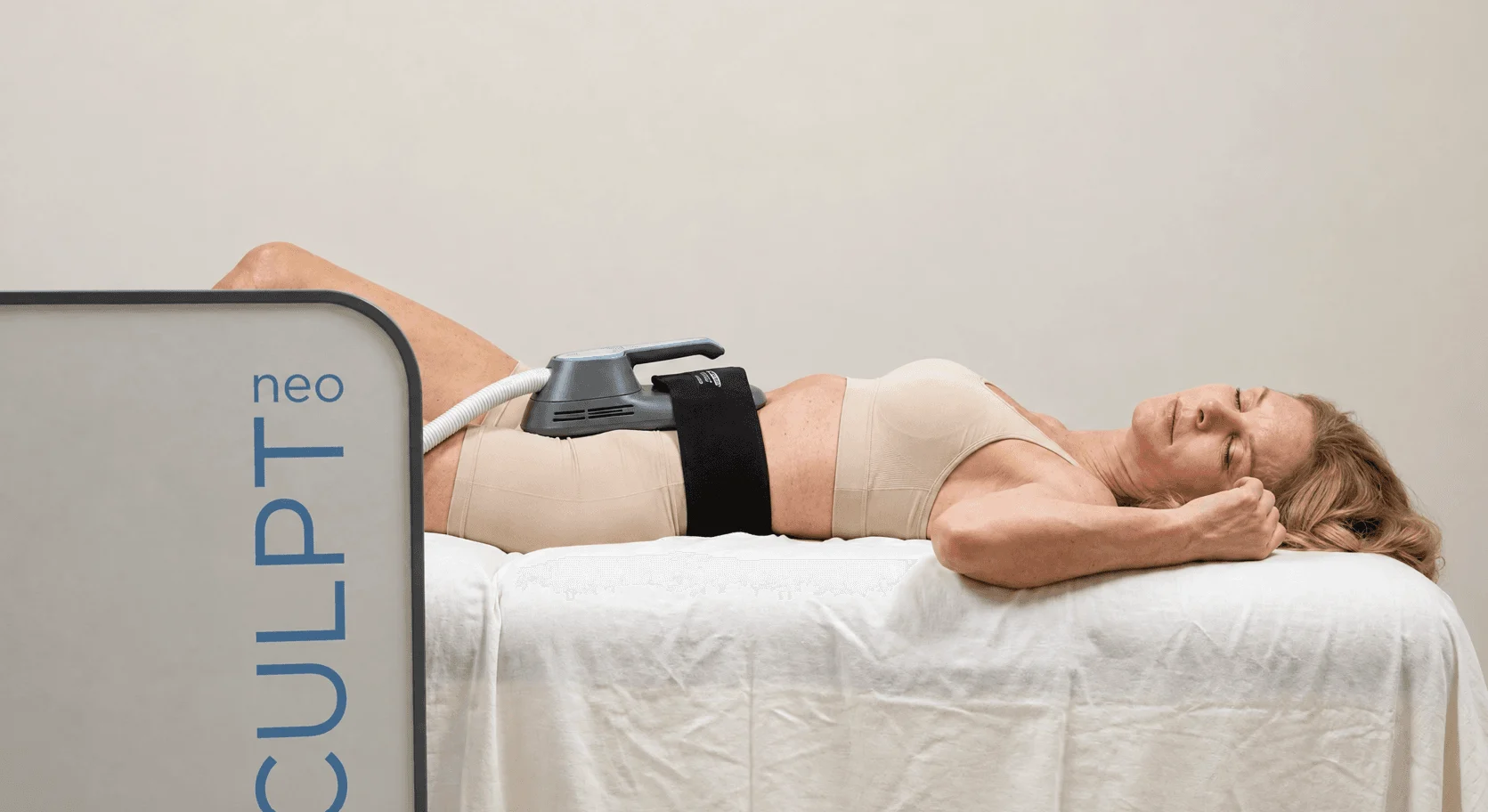
Core Strengthening with Emsculpt Neo
Non-surgical muscle stimulation that rebuilds the deep core supporting your spine and posture.
- Deep Core Activation
- No Downtime
- No Effort Required
Explore More Related Treatments
Pelvic Floor Therapy with Emsella
Thousands of pelvic floor contractions per session, sitting fully clothed on a chair.
- Stay Fully Clothed
- No Downtime
- Thousands of Kegels
Explore More Related Treatments
TMS Therapy with Exomind
Non-invasive brain stimulation
- Drug-Free Session
- Non-Invasive
- No Downtime
Explore More Related Treatments
Laser Therapy for Pain with Emvital
Relief for muscle and joint pain
- Drug-Free Relief
- No Downtime
- Comfortable Warmth



Your Questions
Frequently Asked Questions
What should I do if I am in crisis or having thoughts of suicide?
Does TMS therapy with Exomind replace my medication or therapy?
Who should not have TMS treatment?
Is Camarillo Spine & Nerve Institute a mental health provider?
How long before I might notice a difference?
Can chronic pain be making my mood worse?
What does treatment cost in Camarillo?
Contact Us
Schedule Your Consultation
Scientific References
- O'Reardon JP et al., Biological Psychiatry. (2007). Multisite randomized controlled trial in which active transcranial magnetic stimulation produced greater symptom reduction than sham in medication-free adults with major depression, although absolute response rates remained modest. PMID: 17573044.
- George MS et al., Archives of General Psychiatry. (2010). Sham-controlled randomized trial reporting a higher remission rate with daily left prefrontal transcranial magnetic stimulation than with sham, with remission still reached by a minority of participants. PMID: 20439832.
- Blumberger DM et al., Lancet. (2018). Randomized noninferiority trial finding intermittent theta burst stimulation comparable to standard high-frequency rTMS for treatment-resistant depression while requiring far less time per session. PMID: 29726344.
- Carpenter LL et al., Depression and Anxiety. (2012). Naturalistic observational study of routine clinical practice reporting meaningful symptom improvement in a substantial share of patients who had not responded to medication, without the controls of a randomized trial. PMID: 22689344.
- Cirillo P et al., Brain and Behavior. (2019). Systematic review and meta-analysis suggesting transcranial magnetic stimulation may reduce symptoms in anxiety and trauma-related disorders, while noting small samples and heterogeneous protocols. PMID: 31066227.
- Rossi S et al., Clinical Neurophysiology. (2021). Updated international safety guidance describing screening requirements, contraindications and the rare but real seizure risk associated with transcranial magnetic stimulation. PMID: 33243615.
- Bair MJ et al., Archives of Internal Medicine. (2003). Literature review documenting the frequent co-occurrence of depression and chronic pain and the poorer treatment outcomes typically seen when both are present. PMID: 14609780.