

Urinary Incontinence Treatment in Camarillo, CA
Take Back Control of Your Day
- Common In:
- Women and men over 40
- Primary Causes:
- Pelvic Floor Weakness, Childbirth, Surgery
- Treatment Time:
- 28 minutes per session
- Results:
- Often two to six weeks


What Is Urinary Incontinence?
Recognizing the Signs
Urinary incontinence is any involuntary loss of urine. It is a symptom rather than a disease, and it means that somewhere in the system that holds urine in, the bladder muscle, the urethral sphincter or the pelvic floor muscles that support both, the balance has shifted. Bladder leaks affect women and men, and while the likelihood rises with age, incontinence is not a normal or unavoidable part of getting older.
When you cross your legs before a sneeze, skip the second set at the gym, plan your route around where the restrooms are, or keep a spare pair of underwear in the car, you are managing urinary incontinence. Some people leak a few drops with a cough or a laugh. Others feel a sudden, urgent need and cannot make it to the bathroom in time. Many people have both.
This is common and it is treatable. Surveys of patients consistently find that people live with bladder leaks for years, often more than five, before mentioning it to anyone, usually because it feels embarrassing or because they assume nothing can be done. Neither is true. You do not need to wait, and you do not need to explain yourself to get help.
Why Urinary Incontinence Happens
Understanding the Root Causes
01The Science
Your pelvic floor is a sling of muscles that runs from the pubic bone to the tailbone and supports the bladder, the urethra and the pelvic organs above it. Every time you cough, sneeze, laugh or lift something heavy, pressure inside the abdomen spikes, and that sling is supposed to contract reflexively, a fraction of a second before the pressure arrives, to keep the urethra closed. When those muscles are weak, stretched or poorly coordinated, the reflex arrives late or not at all, and urine escapes.
A second mechanism sits in the bladder wall itself. The detrusor muscle should stay quiet while the bladder fills and contract only when you decide to empty. When it contracts on its own, you feel the sudden urgency that defines overactive bladder, and a pelvic floor that cannot hold against that contraction turns urgency into leakage. The National Institute of Diabetes and Digestive and Kidney Diseases explains these bladder control problems and their causes in plain language.
Nerves connect the two. The signals that run the bladder and the pelvic floor travel through the lower spine, so nerve irritation, disc problems and long-standing postural changes can play a part in how well that system works. Because the muscles themselves are the point of failure in most cases, strengthening them is the foundation of conservative care, which is why pelvic floor therapy with Emsella is usually where we start.
02Deeper Understanding
Stress, Urge, Mixed and Overflow
Why the Type Changes the Treatment
Not all bladder leaks behave the same way, and the type matters because it decides what actually helps. Stress incontinence leaks with pressure: a cough, a sneeze, a laugh, a jump, lifting a toddler or a bag of mulch. Urge incontinence leaks with a sudden, overwhelming need to go, often triggered by running water, cold air or the walk from the car to the front door. Mixed incontinence is both together, and it is the most common pattern in women past midlife.
Overflow incontinence is different. The bladder does not empty properly and dribbles once it is full, and it is more common in men with an enlarged prostate and in people with nerve conditions affecting bladder sensation. Overflow needs a medical workup, not muscle training, because the underlying obstruction or nerve problem has to be identified first.
High-intensity focused electromagnetic stimulation, the HIFEM technology inside the Emsella chair, works by driving thousands of supramaximal pelvic floor contractions in a single session. The published evidence is strongest for stress and mixed incontinence, where pelvic floor strength and coordination are the limiting factor, and studies suggest many patients report meaningful improvement in symptoms and quality of life. Results vary by person, and pairing the work with core strengthening with Emsculpt Neo can help when weak deep abdominal support is part of the picture. Both sit within our functional wellness services in Camarillo, CA, and our article on BTL Emsella in Camarillo, CA walks through what a session involves.
What Weakens the Pelvic Floor?
Several factors stretch, weaken or de-coordinate the pelvic floor, and most people who leak have more than one of them. The MedlinePlus urinary incontinence resource from the National Library of Medicine covers the same contributors from a medical standpoint.
These factors rarely sit on their own. The same deep core weakness that allows bladder leaks often shows up as poor posture and recurring back pain, and living with either for years can wear on mood and confidence in ways we cover on our depression and anxiety page. Our blog article on how pelvic floor strength and core stability support back pain and balance explains how the pieces connect.
- 01Pregnancy and ChildbirthCarrying a pregnancy loads the pelvic floor for months, and vaginal delivery can stretch the muscles and the nerves that supply them.
- 02Perimenopause and MenopauseFalling estrogen thins the tissues of the urethra and vagina and reduces the closing pressure that keeps urine in.
- 03Prostate Surgery in MenRemoval or treatment of the prostate can disturb the sphincter, and leakage after surgery is common in the months that follow.
- 04Chronic Pressure and StrainA long-standing cough, constipation and straining, repeated heavy lifting and extra body weight all load the floor day after day.
- 05Age and InactivityLike any muscle group, the pelvic floor loses strength and fast-twitch response when it is never deliberately trained.
- 06Nerve and Spine InvolvementThe nerves controlling the bladder exit the lower spine, so nerve irritation and long-standing postural change can affect how well bladder control works.

Why Choose Camarillo Spine & Nerve Institute for Urinary Incontinence Care in Camarillo, CA
Dr. Edmond Dooman, DC has cared for Ventura County patients since founding the practice in February 1994, with over 32 years of clinical experience. Care here is non-surgical and drug-free, you stay fully clothed for Emsella sessions, and the conversation is matter-of-fact from the first minute. If your symptoms point to something that needs medical imaging or a urology evaluation, we say so and refer you out.
- A Conversation Without Embarrassment
- We ask direct questions in a private room and treat bladder leaks as the ordinary, common medical issue they are.
- Fully Clothed Sessions
- Emsella is delivered while you sit fully dressed on the chair, with no probes, no undressing and no recovery time.
- Care for Women and Men
- We treat postpartum and perimenopausal patients as well as men dealing with leakage after prostate treatment.
- Honest About Outcomes
- We explain what pelvic floor strengthening can and cannot do, and we refer out when the cause needs medical workup.
Treatment Options Comparison
Compare the non-surgical options we offer for urinary incontinence and see how they differ in focus and timeline.
| Treatment | Best For | Session Time | Results Timeline | Maintenance |
|---|---|---|---|---|
| Pelvic Floor Therapy with Emsella | Stress and mixed incontinence | 28 minutes | Two to six weeks | Occasional top-ups |
| Core Strengthening with Emsculpt Neo | Weak deep core support | 30 minutes | Four to twelve weeks | Periodic sessions |
| Electrotherapy | Muscle activation and control | 10-20 minutes | Several weeks | Series-based |
| Chiropractic Adjustments | Lower back and pelvic mechanics | 10-15 minutes | Often same visit | As symptoms require |
You May Be Experiencing Urinary Incontinence If...
Most people recognize themselves in at least one of the patterns below, and nothing here is unusual. Gradual leaks built up over months or years are what Emsella for urinary incontinence is designed to address. See a doctor first if leaking came on suddenly or comes with burning, blood, fever or trouble emptying your bladder, and seek same-day care if it arrives with leg weakness or numbness in the groin.
Leaks When You Cough or Laugh
A sneeze, a laugh, a cough or picking up a grandchild produces a small leak you did not feel coming.
Sudden, Urgent Trips
The urge arrives with almost no warning, and you sometimes do not make it to the bathroom in time.
Leaking at the Front Door
Putting the key in the lock or hearing running water sets off an urge you cannot hold back.
Pads and Dark Clothing
You wear a liner most days, choose darker trousers, or check for a restroom before you commit to an outing.
Waking Up to Go
You get up twice or more each night, and the broken sleep is starting to affect your energy the next day.
Skipping Things You Enjoy
You have quietly dropped the running group, the trampoline with the kids or the long drive to avoid an accident.
Explore More Related Treatments
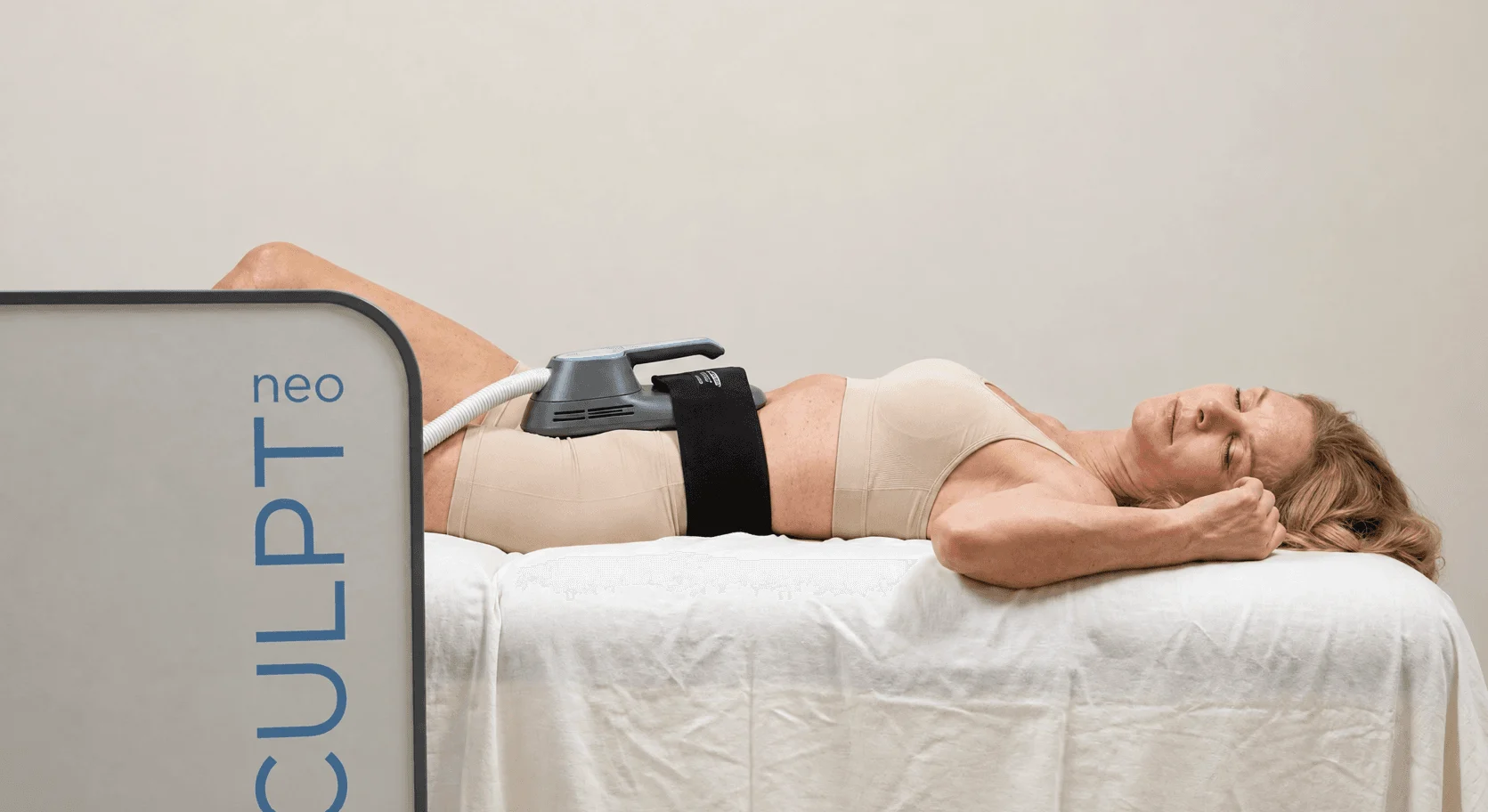
Core Strengthening with Emsculpt Neo
Non-surgical muscle stimulation that rebuilds the deep core supporting your spine and posture.
- Deep Core Activation
- No Downtime
- No Effort Required
Explore More Related Treatments
Pelvic Floor Therapy with Emsella
Thousands of pelvic floor contractions per session, sitting fully clothed on a chair.
- Stay Fully Clothed
- No Downtime
- Thousands of Kegels
Explore More Related Treatments
TMS Therapy with Exomind
Non-invasive brain stimulation
- Drug-Free Session
- Non-Invasive
- No Downtime
Explore More Related Treatments
Laser Therapy for Pain with Emvital
Relief for muscle and joint pain
- Drug-Free Relief
- No Downtime
- Comfortable Warmth



Your Questions
Frequently Asked Questions
Is urinary incontinence just a normal part of getting older?
Does Emsella help men after prostate surgery?
Do I have to undress for a pelvic floor session?
How many sessions will I need, and how soon will I notice a change?
Will this help if my leaks are urgency-related rather than pressure-related?
When should I see a medical doctor before starting treatment here?
What does treatment cost, and is it covered?
Contact Us
Schedule Your Consultation
Scientific References
- Samuels JB et al., Lasers in Surgery and Medicine. (2019). Safety and efficacy of a non-invasive high-intensity focused electromagnetic field (HIFEM) device for treatment of urinary incontinence and enhancement of quality of life. PMID: 31172580.
- Silantyeva E et al., Female Pelvic Medicine and Reconstructive Surgery. (2021). A comparative study on the effects of high-intensity focused electromagnetic technology and electrostimulation for the treatment of pelvic floor muscles and urinary incontinence in parous women. PMID: 31860567.
- Dumoulin C et al., Cochrane Database of Systematic Reviews. (2018). Pelvic floor muscle training versus no treatment, or inactive control treatments, for urinary incontinence in women. PMID: 30288727.
- Anderson CA et al., Cochrane Database of Systematic Reviews. (2015). Conservative management for postprostatectomy urinary incontinence. PMID: 25602133.
- Milsom I et al., Climacteric. (2019). Review of the prevalence of urinary incontinence in women and men across age groups. PMID: 30572737.
- Nambiar AK et al., European Urology. (2022). European Association of Urology guidelines on the diagnosis and management of female non-neurogenic lower urinary tract symptoms, part 1, diagnostics, overactive bladder and stress urinary incontinence. PMID: 35216856.
- National Institute of Diabetes and Digestive and Kidney Diseases. (2021). Patient education on bladder control problems, including the types of urinary incontinence and when to see a health care professional.