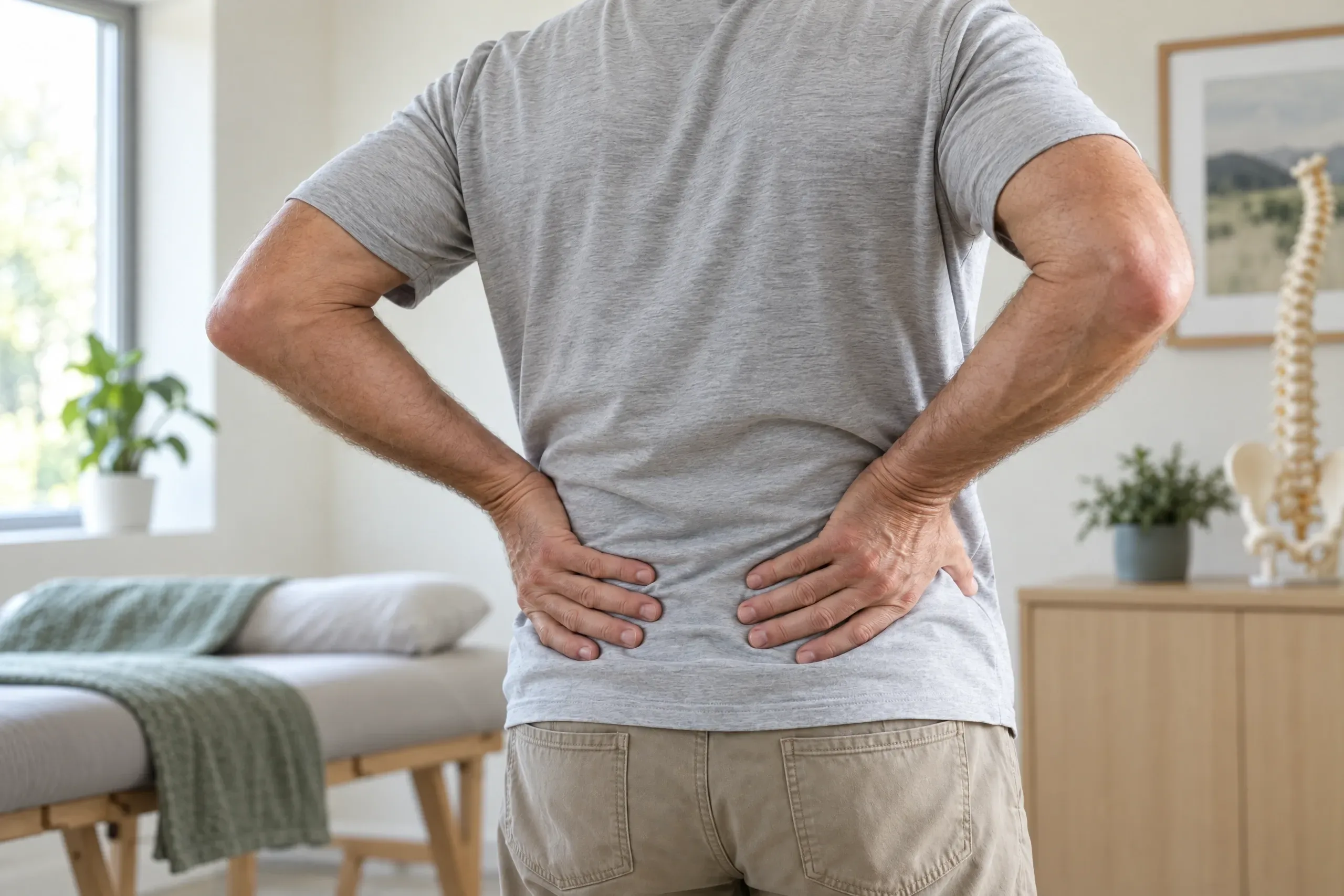
Rebuilding Strength After Pregnancy: Why Postpartum Recovery Doesn't End at Six Weeks
Lower back pain, core weakness, urinary leakage and hip discomfort are common long after the six-week clearance visit. They are common, but they are not something you have to accept. Here is what changes in the core and pelvic floor, and how strength is rebuilt.
Postpartum recovery does not end at the six-week visit. That appointment confirms that tissues have started to heal and that it is generally safe to resume activity. It does not mean the deep core and pelvic floor have regained their strength or their coordination, and rebuilding those systems usually takes months of graded work rather than weeks. Lower back pain, core weakness and urinary leakage are common long after six weeks. Care in Camarillo, CA can help, because common is not the same as permanent.
Many women are told that once they have been cleared at their six-week postpartum appointment, their bodies should gradually return to normal. For some, that happens naturally. For many others, lingering symptoms persist for months or even years. Lower back pain, core weakness, urinary leakage, hip discomfort and a feeling that the body simply does not move the way it used to are all common after pregnancy. They are common, but they should not simply be accepted as the new normal.
Why the Six-Week Clearance Is a Starting Line, Not a Finish Line
The six-week check is primarily a medical safety review. It confirms that bleeding has settled, that any incision or tear is healing, that blood pressure and mood are being monitored, and that contraception and general activity can be discussed. It is an important appointment, and it is not a strength assessment.
Very little in a standard postpartum visit examines how well the deep abdominal wall and pelvic floor are actually working together under load. Tissue healing and functional strength are different things on different timelines. A wound can be closed while the muscle system around it is still deconditioned, poorly coordinated and easily fatigued. That gap is where most persistent postpartum symptoms live.
What Actually Changes in the Abdominal Wall During Pregnancy
Pregnancy places extraordinary demands on the body's stabilizing systems. As the abdomen expands over nine months, the deep core muscles lengthen and weaken. The transverse abdominis, the deep corset-like muscle that wraps around the trunk, is stretched well beyond its usual working length. The rectus abdominis, the more superficial muscle at the front, is pushed forward and apart. The connective tissue between the two sides, called the linea alba, softens and widens.
Hormonal changes increase ligament laxity throughout the body, which is useful for delivery and unhelpful for stability. Meanwhile, the pelvic floor supports additional weight throughout pregnancy and experiences significant strain during childbirth, whether delivery is vaginal or by caesarean section. Even after delivery, these muscles do not automatically regain their previous strength or coordination. Length comes back before control does.
Diastasis Recti Explained in Plain Language
Diastasis recti is a widening of the gap between the two halves of the rectus abdominis, caused by stretching of the connective tissue running down the midline. It is not a tear and it is not a hernia. It is a stretched, thinner midline that transmits force less efficiently.
Some degree of separation is present in almost everyone at the end of pregnancy. For many women it narrows on its own during the first months after birth. For others it persists, and when it does, the abdominal wall struggles to generate tension across the midline. That shows up as a visible doming or coning along the centre of the abdomen when sitting up, a sense that the middle is not holding, and often as low back or pelvic discomfort, because the trunk is asking other muscles to do a job they are not designed for.
The width of the gap matters less than whether you can generate tension across it. A narrower gap with no control is often more symptomatic than a wider gap with good control, which is why measuring finger-widths alone tells an incomplete story and why assessment is worth more than a self-test.
What Happens to the Pelvic Floor
The pelvic floor is a hammock of muscle spanning the base of the pelvis. It supports the bladder, bowel and uterus, contributes to continence, and works with the diaphragm and deep abdominals as part of the trunk's stability system. It carries increasing load throughout pregnancy and is stretched substantially during vaginal birth.
Research has shown that pelvic floor dysfunction affects a substantial proportion of postpartum women and can contribute to urinary incontinence, pelvic pressure, reduced stability and lower back discomfort. The National Institute of Diabetes and Digestive and Kidney Diseases notes that bladder control problems are common in women and are treatable, which is the part that often gets lost.
Weakness is not the only pattern. Some women develop a pelvic floor that is overactive and held tight, which can also produce leaking, pain with intercourse and a poor response to more clenching. This is one reason generic advice to do more Kegels does not work for everyone, and can occasionally make symptoms worse.
Why Leaking and Back Pain Are Common, Not Inevitable
Let us be direct about leaking, because vagueness here helps nobody. Losing urine when you cough, sneeze, laugh, lift your child or run is called stress urinary incontinence. It is extremely common after childbirth. It is also a symptom with identifiable causes, not an inevitable consequence of having become a mother, and it is worth raising with a provider rather than managing quietly with pads for years.
Back pain follows a related logic. Core weakness may alter posture and movement patterns, placing additional stress on the spine and hips. When the deep system is not contributing, the superficial muscles of the low back and hips take over as substitutes. They fatigue, they tighten, and they ache. The National Institute of Arthritis and Musculoskeletal and Skin Diseases lists weak trunk muscles and poor movement mechanics among the factors associated with back pain. Add the mechanical realities of new parenthood, carrying a growing child on one hip, feeding in slumped positions, lifting a car seat at arm's length, and the pattern reinforces itself daily.
Persistent back pain and its underlying causes, ongoing urinary incontinence and non-surgical treatment options, and the postural changes that follow pregnancy are all worth assessing properly, because each of them responds to the same underlying question: is the deep stability system doing its job?
Safety First: When to Be Cleared and When to Call
Anyone who is postpartum should be cleared by their obstetric provider before starting any strengthening programme, including anything described in this article. That applies whether you gave birth six weeks ago or two years ago, and it applies particularly after a caesarean section, a significant tear, or a complicated delivery.
Seek medical evaluation promptly rather than continuing to exercise if you experience:
- Heavy vaginal bleeding, or bleeding that returns after it had stopped
- Fever, chills or foul-smelling discharge
- Persistent or severe pelvic pain
- A dragging or bulging sensation in the vagina
- Pain, redness or discharge from a caesarean incision
- Severe headache, chest pain, breathlessness or calf swelling
- Thoughts of harming yourself or your baby, which need same-day support
MedlinePlus postpartum care guidance covers the warning signs worth knowing in the first weeks and months after birth.
What a Graded Return to Strength Looks Like
Rebuilding strength after pregnancy works best when it is progressive and specific. A reasonable sequence, individualized to what an examination finds, generally moves through these stages:
- Breathing and coordination. Restoring the relationship between the diaphragm and the pelvic floor. Learning to let the pelvic floor relax as well as contract, which most programmes skip entirely.
- Low-load activation. Gentle deep abdominal and pelvic floor work in supported positions, with attention to whether the midline can hold tension.
- Load and position. Adding resistance, progressing to standing, then to positions that mirror real life: lifting, carrying on one side, getting up from the floor repeatedly.
- Impact and sport. Returning to running or jumping last, once the system holds under slower load. Leaking during a return to running is a signal to step back a stage, not to push through.
Progress is rarely linear, and sleep deprivation affects it more than most people expect. A plan that assumes a full night's sleep and ninety uninterrupted minutes is a plan for somebody else.
Where Technology-Assisted Strengthening Fits
At Camarillo Spine & Nerve Institute, postpartum recovery is viewed through a functional lens. Rather than focusing solely on symptom management, we evaluate how the core, pelvic floor, spine and surrounding musculature are working together. Depending on each patient's needs, treatment may include spinal care, rehabilitation strategies and technology-assisted strengthening.
Electromagnetic muscle stimulation is used to help muscles that are difficult to recruit voluntarily. Core strengthening with Emsculpt Neo targets the abdominal wall, prompting deep contractions that can be hard to achieve when the connection to those muscles feels absent. Pelvic floor therapy with Emsella works through a seat, fully clothed, and is designed to stimulate pelvic floor contraction for women who cannot reliably find those muscles on their own.
These technologies support a rehabilitation plan; they do not replace one. Learning to use the muscles in daily life is still the goal, and results vary between individuals.
Important contraindications. Electromagnetic devices of this kind are not used during pregnancy. They are also contraindicated for anyone with a copper intrauterine device or other metal implant in the treatment area, and for anyone with implanted electronic devices such as a pacemaker, defibrillator or neurostimulator. Tell us about any implant, device or metal hardware before treatment is considered, and about any current or suspected pregnancy.
How We Approach Postpartum Recovery in Camarillo, CA
Recovery is not simply about returning to where you were before pregnancy. It is about rebuilding a body that feels strong, supported and capable of meeting the demands of everyday life, which after a baby are considerable.
Dr. Edmond Dooman, DC has provided non-surgical spine and nerve care in Camarillo since 1994, and postpartum patients are assessed the way every patient is: by looking for the root cause rather than the loudest symptom. That means examining posture, spinal mechanics, hip function and how the trunk behaves under load, then building a plan around what is actually limiting you. Most patients see improvement in pain and core stability within a few weeks of beginning treatment, although individual results vary and we will not promise you a timeline we cannot control.
Frequently Asked Questions About Postpartum Recovery
How long does postpartum recovery really take?
Longer than six weeks for most women. Tissue healing largely happens in the first six to twelve weeks, but restoring deep core and pelvic floor strength commonly takes six to twelve months of consistent, graded work, and sometimes longer after a difficult delivery. There is no deadline. Progress that continues two years postpartum is still progress.
Is it too late to start if my child is already a toddler?
No. Muscle responds to training at any point after birth, and many women begin rehabilitation years later with meaningful improvement. Symptoms that have been present for a long time may take longer to change, but the underlying principle does not expire. Get clearance from your provider, then start at the stage that matches your current function rather than your age.
Will diastasis recti close on its own?
Often it narrows substantially during the first few months without any specific intervention. When a gap persists, targeted work on generating tension across the midline usually helps more than waiting. Surgery is considered only in a minority of cases and only after conservative rehabilitation has been tried. An assessment can tell you which category you are in.
Are Kegels enough to stop leaking?
Sometimes, but not always. Pelvic floor exercises help many women when they are done correctly and progressed over time. They do not help when the pelvic floor is already overactive rather than weak, or when the problem is coordination and timing rather than raw strength. If months of Kegels have not changed anything, that is a reason to be assessed, not to do more.
Can I use Emsella or Emsculpt Neo if I am still breastfeeding?
Discuss this with your obstetric provider and with us before booking. These devices are not used during pregnancy and there are specific contraindications, including a copper intrauterine device and implanted electronic devices. Breastfeeding is assessed individually as part of your intake. We would rather delay treatment than proceed without a clear answer.
Why does my back hurt more now than during pregnancy?
Because the demands changed. Pregnancy loads the spine statically; new parenthood loads it repeatedly and asymmetrically, with lifting, carrying on one hip and long periods of feeding in flexed postures. A deconditioned deep core makes those loads land on structures less suited to them. The pain is real and it usually has a mechanical explanation worth identifying.
Do I need to see someone if my only symptom is occasional leaking?
It is worth raising, yes. Occasional stress incontinence is common and highly treatable, and it tends to be easier to address earlier than after years of accommodation. Many women never mention it because they assume it is simply part of motherhood. It is common, which is not the same thing as untreatable.
Book Your Consultation in Camarillo, CA
If you are months or years past your six-week appointment and still dealing with core weakness, back pain or leaking, an assessment can tell you what is actually happening rather than leaving you to guess. The team at Camarillo Spine & Nerve Institute can evaluate how your core, pelvic floor and spine are working together and discuss whether Emsculpt Neo in Camarillo, CA and a structured rehabilitation plan fit your situation. Bring your obstetric provider's clearance, then contact our Camarillo, CA office or call (805) 484-1077 to arrange a consultation.
Related Articles
- The Core Connection: How Pelvic Floor Strength and Core Stability Support Back Pain, Balance, and Long-Term Health
- BTL EMSELLA in Camarillo, CA: Pelvic Floor Strength, Core Stability, and Non-Surgical Wellness
- EMSCULPT NEO in Camarillo, CA: Core Strength, Functional Wellness, and Non-Surgical Body Conditioning