

TMS Therapy with Exomind in Camarillo, CA
- Treatment Time:
- 20 to 30 minutes
- Downtime:
- None for most patients
- Onset:
- Varies by individual
- Modality:
- Non-invasive rTMS
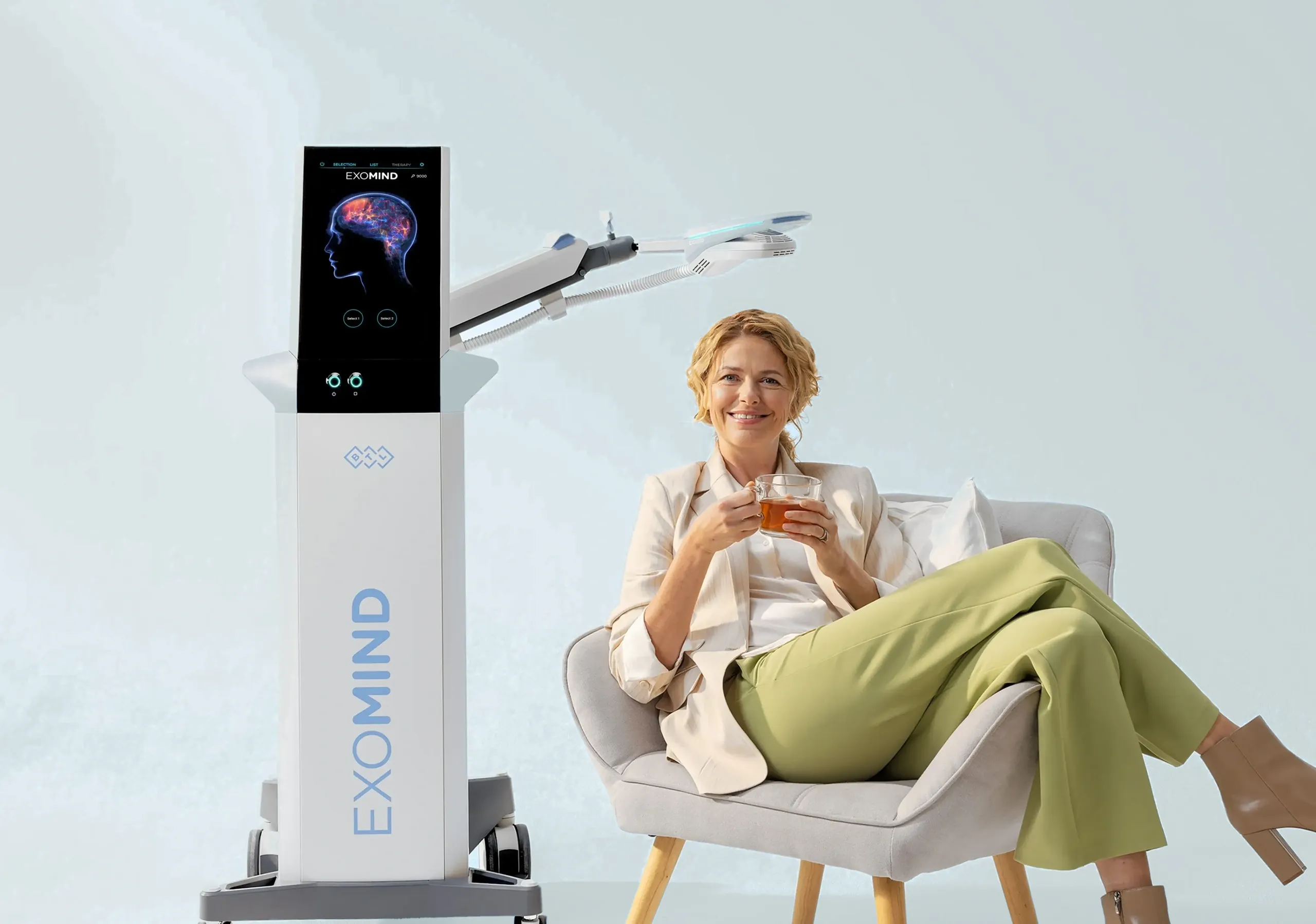
TMS Therapy in Camarillo
Exomind TMS Therapy, Explained Plainly
Exomind is a BTL device that delivers repetitive transcranial magnetic stimulation, a non-invasive technology studied for its effects on mood and cognition. We offer it in Camarillo, CA as part of our functional wellness care, alongside the mental health treatment you may already be receiving rather than in place of it.
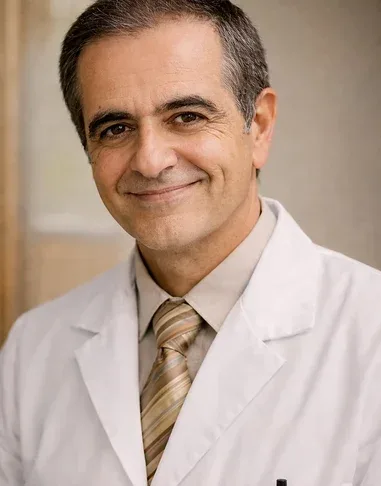
Dr. Edmond Dooman, DC has cared for patients in Camarillo since founding the practice in February 1994, with over 32 years of clinical experience in non-surgical spine and nerve care. Every Exomind course begins with a consultation and a review of your health history so we can decide together whether this treatment is appropriate for you.

The Challenge
Why Camarillo Patients Ask About TMS Therapy
Mood, focus and pain
Understanding Exomind
What Is Exomind TMS Therapy?
How magnetic stimulation works
Exomind is a BTL device that delivers repetitive transcranial magnetic stimulation, or rTMS. A coil held at the scalp sends brief magnetic pulses through the skull, inducing small currents in brain regions tied to mood and focus. The National Institute of Mental Health lists rTMS among established brain stimulation therapies.
Sessions run in our Camarillo office with you awake and seated, and no sedation is used. Studies suggest a repeated course may gradually change how readily the stimulated network activates, so treatment runs over weeks. Results vary. Exomind complements your functional wellness care in Camarillo, CA and never replaces psychiatric care or prescribed medication.
Treatment Timeline:
- Session:
- 20 to 30 minutes
- Course:
- Set at consultation (average 6 to 8 sessions)
- Onset:
- Varies by individual
What We Discuss
Concerns Patients Ask Us About
Honest, qualified expectations
- Low Mood
- May support mood regulation alongside your existing mental health care
- Anxious Feelings
- Studies suggest some people report feeling calmer over a course
- Mental Fog
- Many patients hope for clearer focus and easier concentration
- Sleep Disruption
- Poor sleep often travels with low mood and long-standing pain
- Low Motivation
- May support the drive to stay active and keep up with therapy
- Pain-Related Distress
- Chronic pain and mood are closely linked in many patients
Benefits of Exomind TMS
What the session involves
Exomind TMS vs Other Approaches
This table is for orientation only. It does not rank the options, and the right choice is a decision for you and your treating clinicians.
| Approach | How It Works | Session Time | Typical Course | Oversight | Downtime | Often Considered For |
|---|---|---|---|---|---|---|
| Exomind rTMS | Magnetic pulses stimulate brain regions tied to mood and attention | 20 to 30 minutes | A planned series over several weeks | Delivered in-office with trained staff and professional oversight | None expected | Adults seeking a drug-free option alongside existing care |
| Antidepressant medication | Alters neurotransmitter signalling throughout the body | Daily dosing at home | Ongoing, reviewed by the prescriber | Prescribed and monitored by a physician | None, though side effects vary | Patients whose physician recommends pharmacological treatment |
| Psychotherapy | Structured talking therapy to change thoughts and behaviour | 45 to 60 minutes | Weekly or biweekly over months | Licensed therapist or psychologist | None | Patients who want skills, insight and ongoing support |
| Clinic-based rTMS under psychiatric care | Protocol-driven rTMS within a psychiatric treatment plan | 20 to 40 minutes | Several weeks of near-daily sessions | Psychiatric referral and supervision | None expected | Diagnosed depression managed by a psychiatric team |
| Lifestyle and exercise | Activity, sleep and nutrition changes that influence mood | Varies daily | Ongoing and long term | Self-directed with clinician guidance | None | Anyone, usually combined with other approaches |





Candidacy
Who Is a Good Candidate for Exomind?
Screening comes first
Exomind is considered for healthy adults who are curious about a drug-free option and who are already managing their mental health with appropriate professional support. It complements that care and does not replace it. Your consultation with Dr. Edmond Dooman, DC covers your history, current medications and any implanted devices, and screening decides whether treatment goes ahead at all.
You May Be a Candidate for Exomind TMS Therapy
- Adults who want a non-invasive option to sit alongside their current care
- People already working with a physician, psychiatrist or therapist
- Patients with realistic expectations who understand results vary
- Those who can commit to a course of sessions over several weeks
- People whose prescriber is aware of and comfortable with the plan
Who Should Wait or Avoid Exomind TMS Therapy
- Anyone with ferromagnetic metal in or near the head, including shrapnel, surgical clips or metal plates
- Anyone with an implanted electronic device near the head, such as a cochlear implant, deep brain stimulator or implanted pulse generator
- Anyone with aneurysm clips, coils or stents in the head or neck
- Anyone with a personal or family history of seizures or epilepsy
- People who are pregnant or think they may be pregnant
- Anyone with a recent head injury, brain surgery or unstable neurological condition
Cardiac pacemakers and other implanted devices also need review before any decision is made. Nothing here is a diagnosis. If you are in active mental health crisis, treatment planning is not the first step and urgent care is, and you can read how the American Psychiatric Association describes depression and its treatment. Never stop or change a prescribed medication in order to start Exomind. Speak with the prescriber first.
The Visit
What a Session Involves
Step by step
Consultation
Dr. Dooman reviews your history, medications and implants, and confirms whether Exomind is appropriate.
Setup
You sit upright while the Exomind applicator is positioned and settings are set to your comfort level.
Session
The device delivers pulses in short trains for roughly 20 to 30 minutes while you stay awake and seated.
Check-In
Staff ask how the session felt, note anything unusual, and adjust the plan for your next visit.
Ongoing Review
Your progress and your other care are revisited across the course so the plan stays appropriate.
Side Effects and Safety
The most commonly reported effects of repetitive transcranial magnetic stimulation are mild and short-lived: scalp discomfort or tingling at the coil site, tapping sensations during the pulses, headache, transient lightheadedness and temporary hearing sensitivity from the clicking sound, which is why ear protection is used. These typically ease within hours. The serious risk associated with rTMS is seizure. It is rare, but it is the reason screening matters and the reason a personal or family history of seizures, recent head injury or unstable neurological illness may exclude you.
Treatment is not offered where there is ferromagnetic metal or an implanted electronic device in or near the head, including cochlear implants, deep brain stimulators, aneurysm clips and implanted pulse generators, and caution applies in pregnancy. Every session at our Camarillo office is delivered by trained staff under appropriate professional oversight, and every course begins with a consultation that decides whether treatment is appropriate at all. Device safety information is published by the U.S. Food and Drug Administration.
Exomind complements psychiatric care, psychotherapy and prescribed medication. It does not replace any of them, and you should never stop or reduce a prescribed medication without speaking to the prescriber first. If you are experiencing thoughts of self-harm or suicide, or you are in immediate distress, call or text 988 to reach the Suicide and Crisis Lifeline, or go to your nearest emergency room. Please do not wait for an appointment with us.
Pricing
Cost of TMS Therapy in Camarillo, CA
What affects your investment
We do not publish a price list for Exomind, because the cost depends on how many sessions your plan calls for, how those sessions are spaced, and whether Exomind is combined with other care in the office. Quoting a figure before we have reviewed your history would be guesswork, so exact pricing is discussed at your consultation, in writing, before anything is scheduled.
Camarillo Spine & Nerve Institute is a cash-based practice. We accept major credit cards, and CareCredit and WellFit financing are available if you would prefer to spread the cost. Stephanie, our office manager, can walk you through the options before you commit. If a course of Exomind is not the right use of your budget, we will say so, and we may suggest starting with something else such as laser therapy for pain with Emvital in Camarillo, CA if physical pain is the more pressing problem.
Our Approach
Why Choose Us for TMS Therapy in Camarillo, CA
Careful, conservative care
Dr. Edmond Dooman, DC is a chiropractor with over 32 years of clinical experience and has led Camarillo Spine & Nerve Institute since 1994. He takes a conservative view of every technology in the office, explains plainly what it can and cannot do, and will tell you when Exomind is not the right fit for you.
Consultation First
No one starts a course before a full health review
Plain Language
Mechanisms and limits explained without jargon or hype
Honest About Limits
We do not promise outcomes and we say when to look elsewhere
Care Coordination
We encourage you to keep your prescriber and therapist informed
32 Years of Practice
Dr. Dooman has led Camarillo Spine & Nerve Institute since 1994
Awake and Seated
No sedation, and ear protection is used during every session

Explore More Related Treatments
Core Strengthening with Emsculpt Neo
Non-surgical muscle stimulation that rebuilds the deep core supporting your spine and posture.
- Deep Core Activation
- No Downtime
- No Effort Required
Explore More Related Treatments
Pelvic Floor Therapy with Emsella
Thousands of pelvic floor contractions per session, sitting fully clothed on a chair.
- Stay Fully Clothed
- No Downtime
- Thousands of Kegels
Explore More Related Treatments
Laser Therapy for Pain with Emvital
Relief for muscle and joint pain
- Drug-Free Relief
- No Downtime
- Comfortable Warmth
Explore More Related Treatments
Electrotherapy
Gentle electrical stimulation that calms pain signals and eases muscle tension.
- No Medication
- Comfortable Session
- No Downtime



Common Questions
Exomind TMS Therapy FAQ
How much does Exomind TMS therapy cost in Camarillo, CA?
How long does a session take?
Does Exomind TMS therapy hurt?
When might I notice a change?
How many sessions will I need?
Can Exomind replace my antidepressant or my therapist?
Who should not have Exomind TMS therapy?
What should I do if I am in crisis right now?
Is Exomind the same as clinic-based rTMS for depression?
Is this practice a mental health provider?
Can I combine Exomind with other treatments here?
Can I drive myself home afterwards?
Contact Us
Schedule Your Consultation
References
- O'Reardon JP et al., Biol Psychiatry. (2007). Efficacy and safety of transcranial magnetic stimulation in the acute treatment of major depression was assessed in a multisite randomized controlled trial, which reported modest but statistically significant benefit over sham. PMID: 17573044.
- George MS et al., Arch Gen Psychiatry. (2010). Daily left prefrontal transcranial magnetic stimulation therapy for major depressive disorder in a sham-controlled randomized trial produced higher remission rates than sham, though absolute remission remained low. PMID: 20439832.
- Blumberger DM et al., Lancet. (2018). Effectiveness of theta burst versus high-frequency repetitive transcranial magnetic stimulation in patients with depression was compared in a randomised non-inferiority trial, with similar response rates between the two protocols. PMID: 29726344.
- Rossi S et al., Clin Neurophysiol. (2009). Safety, ethical considerations, and application guidelines for the use of transcranial magnetic stimulation in clinical practice and research set out the screening and contraindication standards still referenced today. PMID: 19833552.
- Berlim MT et al., Psychol Med. (2014). Response, remission and drop-out rates following high-frequency repetitive transcranial magnetic stimulation for treating major depression were pooled in a systematic review and meta-analysis of randomized, double-blind and sham-controlled trials. PMID: 23507264.
- Dunner DL et al., J Clin Psychiatry. (2014). A multisite, naturalistic, observational study of transcranial magnetic stimulation for patients with pharmacoresistant major depressive disorder followed outcomes over one year, with benefit sustained in a subset of responders. PMID: 25271871.
- Manufacturer resource: BTL Industries. (2026). Official product information for the Exomind device.