Why Your Ventura County Lifestyle May Be Contributing to Chronic Back Pain and Core Instability
Long commutes down the 101, desk work all week, then a hard Saturday surfing, cycling, hiking or gardening. The Ventura County week is a pattern the spine struggles with, and understanding it is the first step toward a back that holds up.
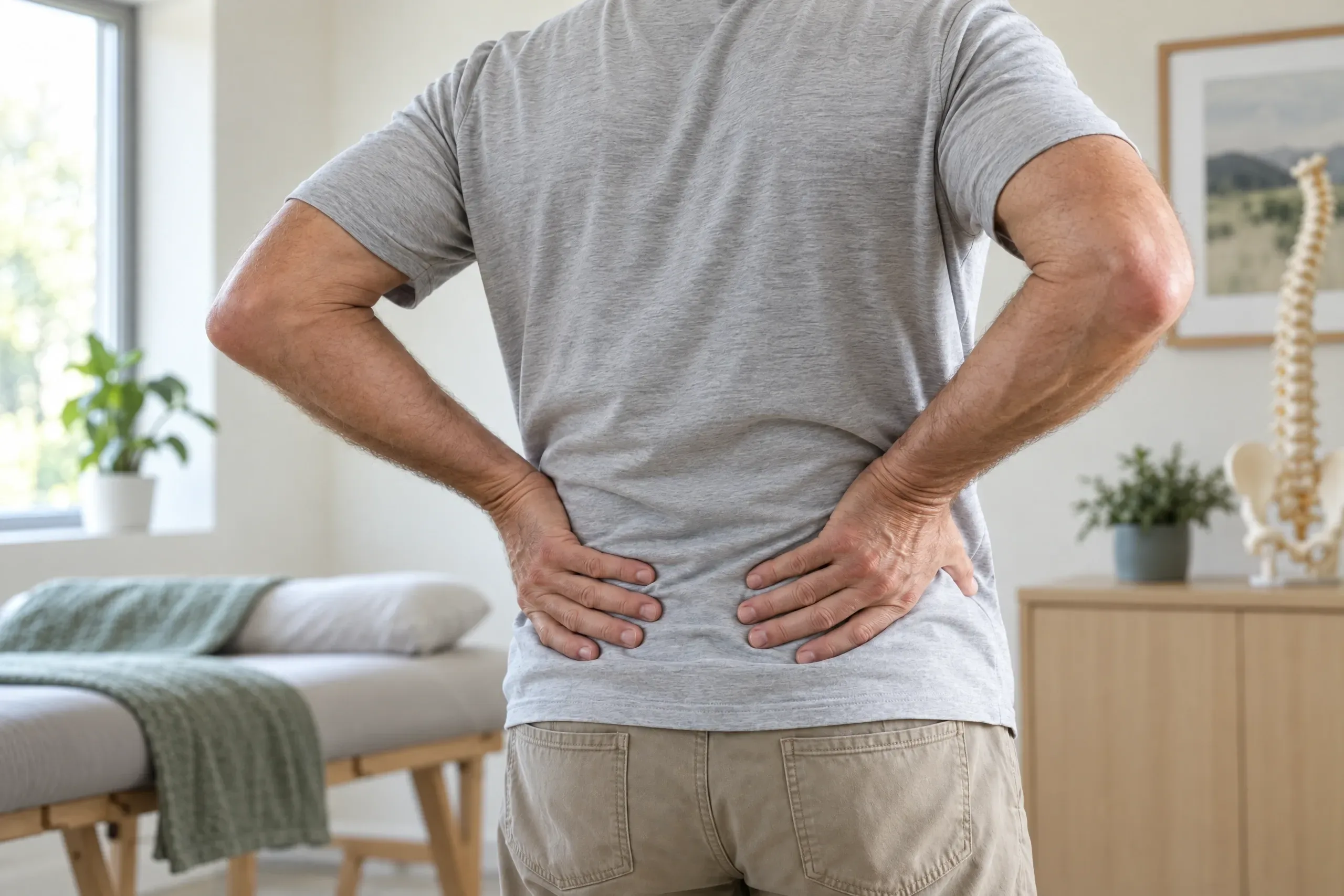
The Ventura County lifestyle can quietly contribute to chronic back pain because it pairs long hours of sitting, mostly commuting and screen work, with short bursts of demanding weekend activity such as surfing, cycling, hiking and gardening. Sitting reduces deep core endurance and stiffens the hips. A hard Saturday then asks the spine to do work the supporting muscles are no longer conditioned for. Over time that mismatch shows up as recurring low back discomfort and a sense of instability, and it is a pattern we see often in Camarillo, CA.
Ventura County is known for active living. Residents hike, garden, golf, surf, commute and stay active later into life, and increasingly prioritize wellness as part of healthy aging. Yet many of the same lifestyle patterns that define the region can quietly contribute to chronic instability, muscle imbalance and persistent back discomfort over time. This article is about that pattern, not about any single injury.
What Makes the Ventura County Lifestyle Hard on the Spine
The difficulty is not that people here are inactive. It is that activity is unevenly distributed. A typical week concentrates almost all of its physical demand into two days, then spends the other five in a chair. Muscles adapt to what they do most, so five days of sitting produce a body configured for sitting, which is then asked on Saturday to paddle out at Ventura Point or push a loaded wheelbarrow across a garden.
Long periods of sitting, repetitive movement, aging-related muscle loss and weakened pelvic support systems all affect how the body stabilizes itself. Research has consistently linked declining muscular strength and physical inactivity with reduced mobility, balance problems and musculoskeletal strain as adults age, and county health reporting has flagged physical inactivity and declining mobility as regional concerns. None of that makes back pain inevitable. It does explain why it is common.
The 101 Commute and What Long Drives Do to Your Low Back
Plenty of people living in Camarillo work in Thousand Oaks, Westlake Village or over the hill in the Valley, and the daily drive down the 101 is often the single longest uninterrupted physical position of the day. Sitting in a car is a specific kind of sitting: a fixed posture, held for an hour or more, with the added element of whole-body vibration from the road and the occupancy of a seat you did not choose.
Two things tend to follow. The hip flexors shorten, because they spend the drive in a flattened, closed position. The deep low back and abdominal muscles switch off, because the seat is doing their job. Arrive at the office, sit for another eight hours, drive home in the evening and the day can total ten hours of the same position. When the drive is combined with a stiff commute schedule, most people do not break it up, and stopping to walk is rarely realistic on the 101.
Practical mitigations are unglamorous and effective: adjust the seat so the hips sit slightly above the knees, support the lumbar curve rather than letting it flatten, and take two minutes to walk and stand tall at either end of the drive before sitting down again.
Desk and Screen Work: The Slow Drift Into Poor Posture
Desk work does not injure a back suddenly. It erodes the systems that protect it. Hours at a screen encourage the head to drift forward, the upper back to round, the pelvis to tuck under and the deep abdominal wall to disengage. Each of those is small on its own. Together, sustained across years, they change how load travels through the spine.
The result is often described by patients as stiffness rather than pain at first: a back that takes a moment to straighten after standing, a neck that aches by late afternoon, a sense that sitting upright now requires effort. That drift into postural dysfunction and its long-term effects is worth taking seriously early, because postural patterns are far easier to change before they have become the body's default.
The Weekend Warrior Pattern
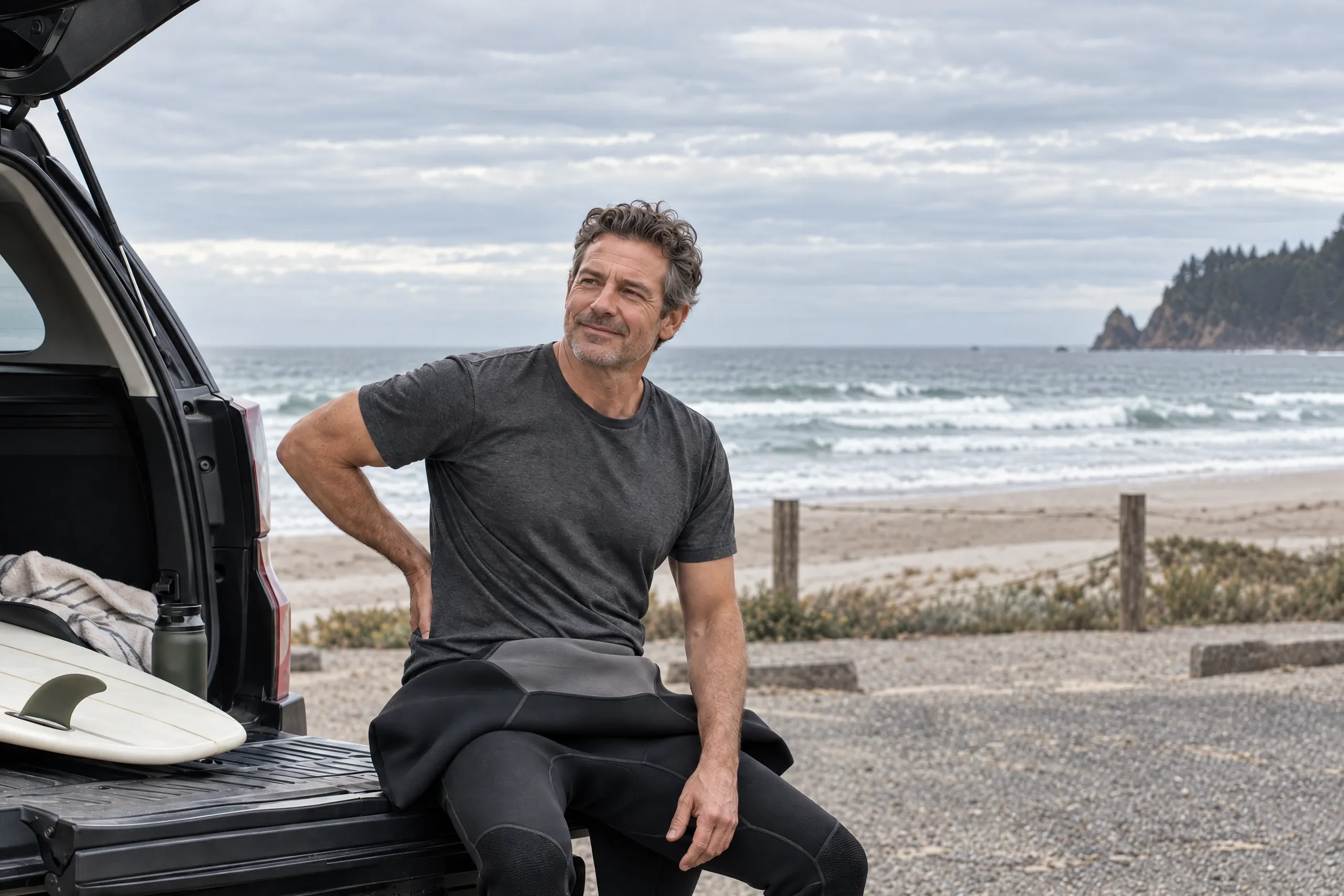
This is the pattern behind a large share of the Monday morning calls we take. Five sedentary weekdays followed by an intense Saturday, then a Sunday spent recovering, then a Monday where standing up from the desk hurts.
The mechanics are straightforward. Endurance in the deep trunk muscles falls quickly without regular use, and it is endurance, not maximum strength, that keeps the spine supported through a three-hour hike or a long session in the water. When that endurance is missing, the larger superficial muscles substitute, fatigue early, and leave the passive structures of the spine absorbing load they are not designed to take repeatedly.
The fix is not to stop doing the things that make living here worthwhile. It is to close the gap between what your week asks of your body and what your weekend asks of it. Two or three short strength sessions during the week does more for a Saturday hike than any amount of stretching on Saturday morning.
Surfing, Cycling, Hiking and Gardening: The Specific Demands
Each of the activities the region is built around asks something particular of the spine.
- Surfing. Extended paddling holds the low back in sustained extension while the shoulders work hard, then the pop-up demands an explosive rotation from a cold trunk. Both are fine with conditioning and both are provocative without it.
- Cycling. Long rides on the Pacific Coast Highway or up into the hills hold a flexed lumbar spine for hours and, like driving, shorten the hip flexors while switching the deep core off.
- Hiking. Descending is harder on the back and knees than climbing. Steep local trails load the spine eccentrically, step after step, which is exactly where a fatigued core stops protecting it.
- Gardening. Repeated bending, kneeling, twisting and lifting, often for hours, often with poor leverage. Lifting a bag of soil with a rounded back and a twist is one of the most common ways a weekend ends in a spasm.
- Golf. A rotational sport played with a stiff thoracic spine and stiff hips, which pushes the rotation into the lumbar segments that are least built for it.
None of this is an argument against any of these activities. Regular physical activity remains one of the better things you can do for spinal health, and MedlinePlus guidance on exercise and physical fitness is consistent on that point. The argument is for preparation.
Why the Deep Core Is Usually the Missing Link
At Camarillo Spine & Nerve Institute, we often see patients whose discomfort is not isolated to the spine alone but connected to weakening through the deeper core system, including the abdominal muscles, hips and pelvic floor. Over time, these systems stop working together efficiently, forcing the body to compensate through posture changes, instability and chronic strain.
The deep core is not the muscles you see. It is the transverse abdominis wrapping the trunk, the multifidus running alongside each spinal segment, the diaphragm above and the pelvic floor below. Working together, they create the stiffness that lets the spine tolerate load. Working poorly, they leave each segment to fend for itself. This is why people with visible abdominal muscles still get back pain, and why crunches are a poor substitute for stability training.
Aging, Muscle Loss and Why Stability Fades Quietly
Muscle mass and strength decline gradually from midlife onward, and the decline accelerates when activity is inconsistent. Because the loss is slow, most people do not notice it as weakness. They notice it as reduced tolerance: the hike that used to be easy now leaves the back sore for two days, the garden project that took an afternoon now takes a weekend and a recovery.
This matters particularly in a region where people stay active later into life, which is genuinely a good thing. The goal is not to do less. It is to maintain the strength that makes doing more sustainable, because balance, mobility and independence in later decades track closely with muscular strength maintained in the decades before.
What You Can Change This Week
- Break up sitting. Stand and move for two minutes every 30 to 45 minutes. Frequency matters more than duration.
- Train twice midweek. Two short sessions of trunk and hip strength beat one long weekend effort.
- Warm up before the fun part. Five minutes of hip and trunk movement before paddling out or picking up a shovel.
- Change how you lift in the garden. Hinge at the hips, keep the load close, and do not rotate under load.
- Set up the car seat properly. Hips slightly above knees, lumbar curve supported, mirrors set so you are not craning.
- Treat two weeks of pain as a signal. Discomfort that has not shifted in a fortnight is worth assessing rather than waiting out.
How Non-Surgical Care Addresses the Root Cause
When the pattern has been running for years, advice alone often is not enough, and the point of an evaluation is to find which part of the chain is actually failing. A comprehensive assessment looks at spinal mechanics, hip mobility, posture and how the trunk behaves under load rather than only at where it hurts.
Depending on findings, care may include spinal decompression therapy in Camarillo, CA where examination suggests disc-related compression contributing to symptoms, structural and postural correction through adjustment of restricted spinal segments, and functional strengthening to rebuild what the lifestyle has eroded. Technologies such as Emsculpt Neo in Camarillo, CA are used through a functional wellness lens rather than an aesthetic one, to help strengthen and retrain the muscles responsible for posture, pelvic stability, balance and spinal support. The National Institute of Arthritis and Musculoskeletal and Skin Diseases and the American Chiropractic Association both support conservative, activity-based approaches as a reasonable first line for most non-specific back pain.
If you want to understand the condition itself in more depth, our page on back pain and its underlying causes covers how it is assessed and managed. For many patients, the goal is not simply pain relief. It is preserving mobility, confidence, independence and strength for the long term. Most patients see improvement in pain and core stability within a few weeks of beginning treatment, although individual results vary.
Frequently Asked Questions About Lifestyle and Back Pain
Can my commute really be causing my back pain?
It can certainly contribute. Prolonged sitting in a fixed position, combined with whole-body vibration from the road, shortens the hip flexors and reduces deep trunk muscle activity. A long daily drive rarely causes an injury by itself, but stacked on top of desk work it removes much of the conditioning the spine relies on. Adjusting seat position and breaking up sitting genuinely helps.
Why does my back hurt on Monday and not on Saturday?
Because inflammation and muscle fatigue build over 24 to 48 hours. Adrenaline, enjoyment and movement mask discomfort during the activity itself. The delayed pattern is typical of soft tissue strain in a body that was not conditioned for the load, and it usually points to a preparation problem rather than a single bad movement.
Is stretching enough to prevent this?
Usually not on its own. Stretching can improve comfort and range of motion, but it does not build the muscular endurance that supports the spine through hours of activity. Most people who rely on stretching alone remain flexible and still unstable. Strength and endurance work is the part that tends to be missing.
Should I stop surfing, cycling or gardening if my back hurts?
Rarely, and usually not permanently. Complete rest tends to worsen deconditioning and prolong the problem. The more useful approach is to modify load temporarily, correct the mechanics that provoke symptoms, and build the missing strength so the activity becomes sustainable again. An evaluation can tell you which specific modifications matter for you.
How long should I wait before getting my back looked at?
If pain has not improved meaningfully within two weeks, or if it is worsening, get it assessed. Seek prompt medical attention sooner for numbness or weakness in a leg, loss of bladder or bowel control, unexplained weight loss, fever, or severe pain following a fall or accident. Those symptoms need urgent evaluation rather than watchful waiting.
Does core strength actually help balance and mobility as I age?
Studies suggest a consistent association between maintained muscular strength and better mobility, balance and independence in older adults. Core and hip strength in particular relate to how confidently people move, turn and recover from a stumble. It is one of the more modifiable factors in healthy aging, and it responds to training well into later decades.
Book Your Consultation in Camarillo, CA
If the pattern in this article sounds like your week, an evaluation can identify which part of it is actually driving your symptoms. The team at Camarillo Spine & Nerve Institute can assess your spine, hips and core together and discuss whether non-surgical spinal decompression or another conservative approach fits your situation. To arrange an assessment, contact our Camarillo, CA office or call (805) 484-1077.