The Evolution of Brain Stimulation: How EXOMIND Builds on Nearly a Century of Neuroscience
When most people hear about EXOMIND for the first time, they often assume it is a completely new technology. In reality, EXOMIND represents the latest step in a scientific journey that began nearly 100 years ago. The technology behind EXOMIND is built upon decades of research into how the brain regulates mood, behavior, motivation, and emotional wellbeing. Its development reflects a broader shift in healthcare—from simply managing symptoms toward understanding and supporting the underlying systems that drive human function.
At Camarillo Spine & Nerve Institute (CSNI), this philosophy feels familiar. Whether treating chronic pain, mobility limitations, neuropathy, or mental wellness concerns, our focus remains the same: identify root causes, restore function, and improve quality of life.
The Early Days of Neurostimulation
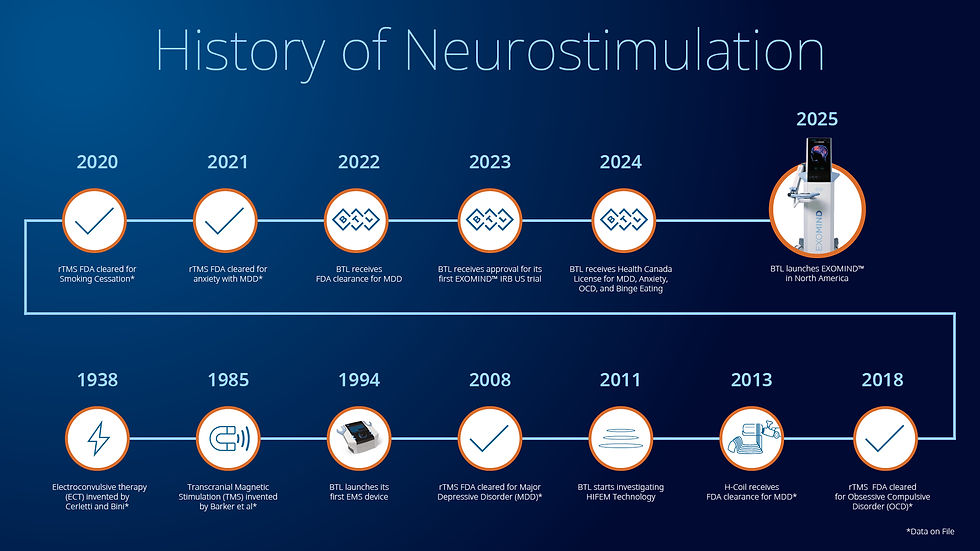
The story begins in 1938 with the development of electroconvulsive therapy (ECT), one of the earliest technologies designed to influence brain activity in patients suffering from severe psychiatric conditions. While effective in some circumstances, researchers continued searching for approaches that could stimulate the brain more precisely and comfortably.
That search led to a major breakthrough in 1985 with the invention of Transcranial Magnetic Stimulation (TMS). For the first time, clinicians could influence brain activity using focused magnetic fields without surgery or implanted devices. This discovery laid the foundation for the technologies we use today.
From Experimental Research to Clinical Treatment
Over the following decades, researchers gained a deeper understanding of how specific regions of the brain influence mood, cognition, and emotional regulation. As evidence accumulated, regulatory approvals followed. In 2008, repetitive Transcranial Magnetic Stimulation (rTMS) received FDA clearance for the treatment of Major Depressive Disorder (MDD). Additional approvals expanded the use of neurostimulation for conditions including anxiety, obsessive-compulsive disorder (OCD), smoking cessation, and binge eating disorder.
These milestones reflected growing confidence in the safety and effectiveness of modern neurostimulation technologies.
The Development of EXOMIND
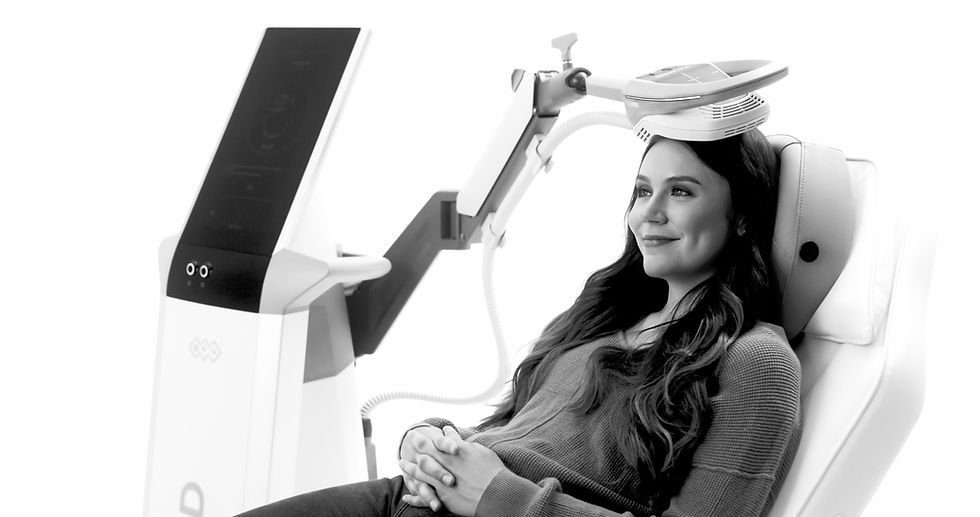
Building upon this foundation, BTL — the company behind technologies such as EMSCULPT NEO and EMSELLA — began investing heavily in neurostimulation research. Following multiple clinical studies, regulatory clearances, and years of development, EXOMIND was introduced as a next-generation platform designed to deliver advanced repetitive Transcranial Magnetic Stimulation (rTMS).

Today, EXOMIND is approved in multiple jurisdictions for the treatment of Major Depressive Disorder and other mental health applications. What makes EXOMIND significant is not that it reinvents neurostimulation. Its significance comes from refining decades of scientific research into a modern, non-invasive patient experience that is accessible, comfortable, and easy to integrate into everyday life.
Why Mental Wellness Matters at CSNI
At Camarillo Spine & Nerve Institute, we believe health cannot be divided into isolated categories. The brain influences how we think, move, recover, adapt, and engage with the world around us. Likewise, chronic pain, reduced mobility, poor sleep, and physical limitations often affect emotional wellbeing. We see these connections every day:
Pain can reduce activity.
Reduced activity can lead to deconditioning.
Loss of strength and mobility can affect confidence and independence.
Over time, emotional wellbeing may suffer as a result.
This is why our practice continues to expand beyond traditional models of care. Our mission is not simply symptom management. It is helping patients restore function, maintain resilience, and improve quality of life through evidence-based, non-surgical solutions.
Looking Forward
The history of neurostimulation reflects a larger story unfolding across healthcare.
As our understanding of the brain continues to evolve, treatment approaches are becoming more precise, more personalized, and more focused on helping people regain control of their lives.
EXOMIND is part of that evolution.

For individuals struggling with depression or seeking alternatives to medication-based treatment alone, it represents an opportunity to benefit from decades of scientific progress while pursuing a future defined by greater function, confidence, and wellbeing. At CSNI, that is ultimately what every treatment is designed to support: helping people live more fully, move more freely, and participate more completely in the lives they want to lead.


Comments